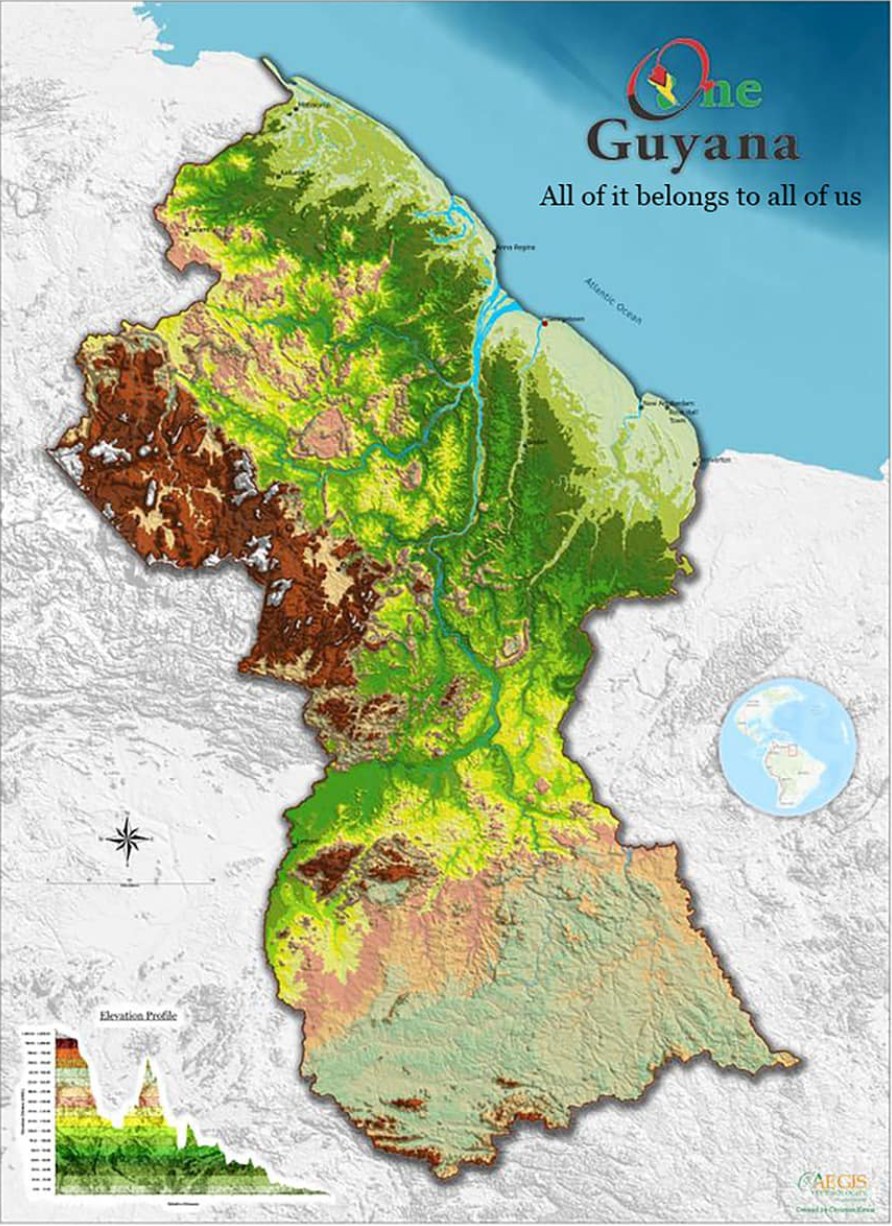
I am pleased to inform that the Government of Guyana will be convening a series of Virtual Diaspora Public Awareness Sessions to provide the Guyanese Diaspora around the world with updates on the Guyana-Venezuela border controversy and also to engage in discussions on this issue.
The Session for Canada is scheduled for Tuesday, 28 November 2023 at 7:00pm (Eastern time). Please see the attached Flyer for additional information.
It would also be appreciated if the Flyer can be shared with your membership and network.
Looking forward to your participation.
Yours sincerely,
Cindy M. Sauers (Ms)
Counsellor
High Commission for the Cooperative Republic of Guyana
It is not the sort of telephone call you receive every day, says a slightly stunned Baroness (Valerie) Amos, the Master of University College, who appears surprised by the call she received, inviting her to become a Lady Companion of the 674-year old Most Noble Order of the Garter.
Membership of the Order, founded in 1348, is an honour reserved for royalty (domestic and overseas), former prime ministers and highly-esteemed individuals, including judges, generals and public servants. Only one other person was made a member of the Order in the most recent New Year’s Honours list – the former Prime Minister Tony Blair (and half a million people objected to this appointment). Did anyone object to her appointment? Baroness Amos laughs diplomatically, ‘Not as far as I know, although I haven’t checked social media.’
She was more likely than most to receive such a call from the Palace – after decades of public service, as a former government minister, long-term leader of the House of Lords, UN under-secretary general, former British High Commissioner to Australia, former head of SOAS and now Master of Univ. So, if not her, who?
Baroness Amos is the first person of colour to be appointed as a Companion (knight or lady) to the Garter. (Haile Selassie I, the late emperor of Ethiopia, was a royal member of the Order)
Baroness Amos, though, is the first person of colour to be appointed as a Companion (knight or lady) to the Garter. (Haile Selassie I, the late emperor of Ethiopia, was a royal member of the Order). And she will be installed as part of the annual ceremony which takes place at Windsor in June. Her badge coat of arms (currently under construction) will be placed in her stall in St George’s chapel and her banner will hang overhead. Talking in her office looking down on Oxford’s high street, Baroness Amos admits she has already been talking to Garter King of arms about what should be on her personal coat of arms. She wants a reference to education and learning, a personal passion, as well as something about Guyana, the place of her birth, and her longer term lineage in West Africa. She also would like something about global affairs.
‘But I don’t want it to be too busy,’ she says, optimistically.
University College Oxford Credit: Shutterstock
Baroness Amos is conscious of the honour of this appointment[1], and looking forward to seeing her personal coat of arms, ‘Not something I ever would have thought I’d have.’
But this is only the latest in a long list of firsts she has achieved, on the way through many glass ceilings. As a Bexleyheath school girl, she admits, she was the first black deputy head girl of her school. Among others firsts: she was the first woman of colour to be a Government minister – and the first person of colour to be Leader of the House of Lords. She is a Companion of Honour and is also the first person of colour to lead an Oxford College.
Being first is not always something with which she is comfortable, though. Baroness Amos was surprised in 2015, when she was appointed Director of London’s prestigious School of Oriental and African Studies, to be told that she was the first person of colour to lead a UK university.
‘It was quite surprising that this was the case in Higher Education,’ she says with concern.
As a Bexleyheath school girl, she was the first black deputy head girl of her school. Among others firsts: she was the first woman of colour to be a Government minister – and the first person of colour to be Leader of the House of Lords. She is a Companion of Honour and is also the first person of colour to lead an Oxford College
It had never occurred to Baroness Amos that she would not go to university. Both her parents were teachers and education was very much part of life in the Amos household. In fact, she says, her brother’s decision not to go to university was far more surprising.
‘It was a big deal,’ she says, more than four decades after the event.
She left her Kent home for university in the 1970s, to take up a place at Warwick to study sociology. You really could not get much more ‘on trend’ than that. Warwick was the epicentre of political student activism, had numerous high-profile academics, and it offered a range of courses that the young Valerie was keen to pursue including options in women’s studies, international relations and the sociology of race relations.
‘There were so many opportunities,’ she says. ‘It was very forward looking and had everything that I was interested in.’
But, she says, she actually applied for different subjects at different institutions – ranging from English to Politics.
In the 1970s, she took up a place at Warwick to study sociology. You really could not get much more ‘on trend’ than that. Warwick was the epicentre of political student activism, had numerous high-profile academics, and courses that the young Valerie was keen to pursue… women’s studies, international relations and the sociology of race relations
Her interest in education has been defining. She would go on to take further courses at Birmingham and East Anglia – and for the last seven years, since becoming Director of SOAS, she has been a leader in higher education.
Arriving at Univ in 2020, she says, was not the best time, in terms of the full Oxford experience. For much of her time as Master, Baroness Amos has presided over multiple changes and iterations of the requirements around COVID-19 – with online learning and social distancing replacing the sort of college atmosphere for which the university is renowned.
She reels off the stages students and staff have been through during the pandemic, recognising the difficulty and stress caused. But, typically finding an upside, she says, ‘There’s nothing like being in a state of adversity to help an individual understand a place and the culture….although it has been difficult getting to know people.’
Her Majesty the Queen on Garter Day Credit: Shutterstock
Clearly intent on being involved with Univ life, Baroness Amos, speaking while some restrictions were still in place, is ready to plunge into collegiate life – and meet more of the students.
‘It’s been harder to meet them [during the pandemic],’ she says. ‘It’s not the same online…but I am really looking forward to doing so and to being part of the College.’
She is also very interested in ‘equalities and inclusion’ and keen to demonstrate that academic excellence can go ‘hand in hand’ with diversity.
‘Univ has been a pioneer in this area,’ she says. ‘In the past, young men from the north were supported to come here. It has been very much at the centre of the drive to increase diversity.’
And more recently, Univ pioneered the Opportunity Programme which was adopted by the central university as Opportunity Oxford. Baroness Amos adds, ‘A lot of things have changed, but not enough…We need to create a culture which encourages people. Young people expect it.’
She has been at the forefront of equalities action for decades. So does the former head of the Equal Opportunities Commission, think past attempts to achieve equality failed or were somehow deficient?
‘The context was different in the 1980s,’ she says. ‘Our knowledge and understanding were different….information is global now. Black Lives Matter went around the world instantly after the murder of George Floyd.’
Baroness Amos adds, ‘There was a global reaction and…there has been a recognition that people everywhere, from every community, need to be included.’
She maintains, ‘Our culture as Oxford has to adapt.’
But, she says, ‘I see this as adding to, rather than taking away….so students feel they belong, whatever their background and values, and they can make a contribution.’
Our culture as Oxford has to adapt…I see this as adding to, rather than taking away….so students feel they belong whatever their background and values, and they can make a contribution
Baroness Amos
Although keen to see some change, Baroness Amos is highly positive about the education at Oxford, ‘The tutorial system is just extraordinary.’
As the former leader of the Lords, Baroness Amos has experience of an historic institution undergoing change, ‘When I arrived in the House of Lords in 1997, there were a few women, over time there have been more…and the culture has changed, the way it works has changed. Now, we have a successful schools outreach programme and electronic voting’.
She adds, ‘Women have only been at Univ for 43 years, the college was founded nearly 775 years ago….it’s a very short time in the arc of history….there is still more work to do.’
But she does not want to see history erased – far from it.
‘We need more information – from other perspectives,’ she says. We need to ask: how can we all be more informed?’ She says simply, ‘If we don’t listen to other perspectives, we are less well informed.
‘We are in a university. A place of knowledge’
Baroness Amos speaks very much from the heart. Through her work with the UN, she travelled widely in West Africa, from where her ancestors were taken into slavery. She is planning to do a DNA test ‘one of these days’. But this year she has her hands full, with throwing herself into Univ life – and taking up her new role in Windsor.
[1] She will continue to be Baroness Amos. Had she not had a previous title, as a Lady Companion of the Garter, she would have been entitled to be called Lady Valerie Amos.
It is with sadness that I share the passing of my dear husband, Jack, on October 14, 2023. Jack was a proud father and grandfather, brother, uncle, loyal friend and trusted mentor. He was predeceased by his parents, Cal and Isabelle Blachford. He leaves to grieve, me, Pauline, his wife of 47 years: his children, Jay (Annette), Dean (Stephanie), Tyler (Rachel), Sabrina (Rob), and his sisters, Bev and Corinne (Wayne). He was blessed by his six grandchildren, who adored their Grandad and brought him great joy: Jada, Sofia, Piper, Melah, Lennon and Jasper.
Jack was born in London, Ontario, raised in Kitchener and moved to Vancouver in 1971, where he worked as the Sales Manager of Pitney Bowes, the copier division. Aspiring to something more creative, in 1977, Jack founded Business Space Planners, which he operated until his retirement six years ago. Seeing commercial space transformed into productive, attractive offices and work stations was his passion. He was highly regarded for his integrity, creativity, great sense of humour and boundless energy.
Jack was a faithful member of the Anglican church families of St. Agnes, North Vancouver and St. Mark, South Surrey. He was very helpful in working with the Diocese in facilities planning, where he was highly valued for his advice and support. He was also a member of the Bishop’s Friends.
During his career, Jack belonged to two professional organizations, The Vancouver Executives Association (Vanex) and Sales and Marketing Executives (SME) of Vancouver. He served as President of both and many of the members became life-long friends. SME held its international convention in Vancouver in 1986 and Jack was honoured to chair the organizing committee for this very successful event.
Jack was an incredible conversationalist and known for his genuine interest in getting to know other people and helping them succeed. Jack will be greatly missed for his warmth, kindness, and compassion.
A Celebration of Jack’s Life will take place on October 26, 2023, at Victory Memorial located at 14381 28th Avenue in South Surrey, at 10.30 a.m.
In lieu of flowers, please consider making a donation in Jack’s memory to either the Vancouver Executives’ Association Scholarship Fund (exec@vanex.com) or the Parkinson Canada (donate.parkinson.ca).
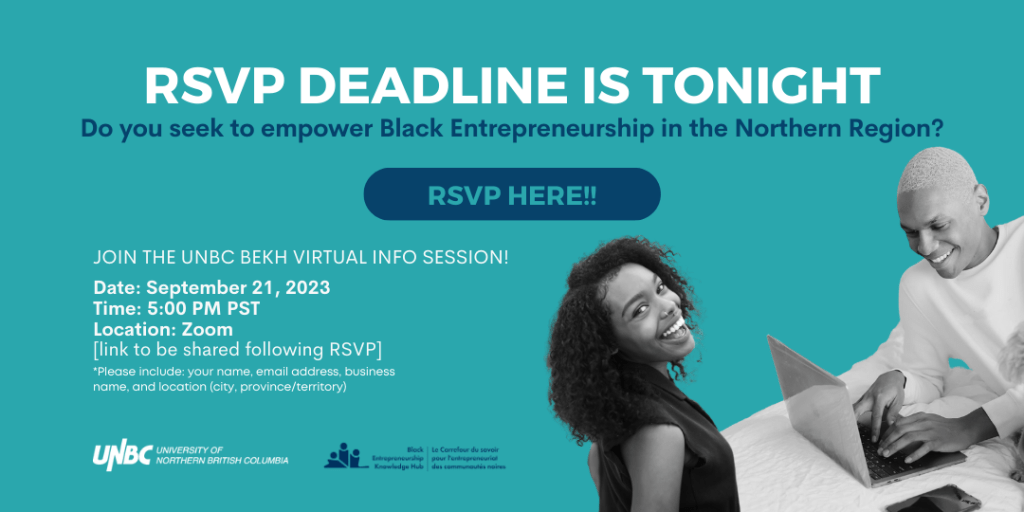
This weekend, there are many opportunities and events you can join to elevate your business and feel empowered. But first, if you’re interested in the growth of Black businesses in the Northern Region RSVP for the virtual info session by tonight!
The UNBCBlack Entrepreneurship Knowledge Hub(BEKH)information session is scheduled for Thursday, September 21st at 5:00pm PT on Zoom (link to be provided after RSVP). Come delve into the specific needs of Black entrepreneurship and celebrate the journeys and achievements of fellow Black business owners. Register here ASAP by sending tracy.hall@unbc.ca your name, email address, business name, and location (city, province/territory).
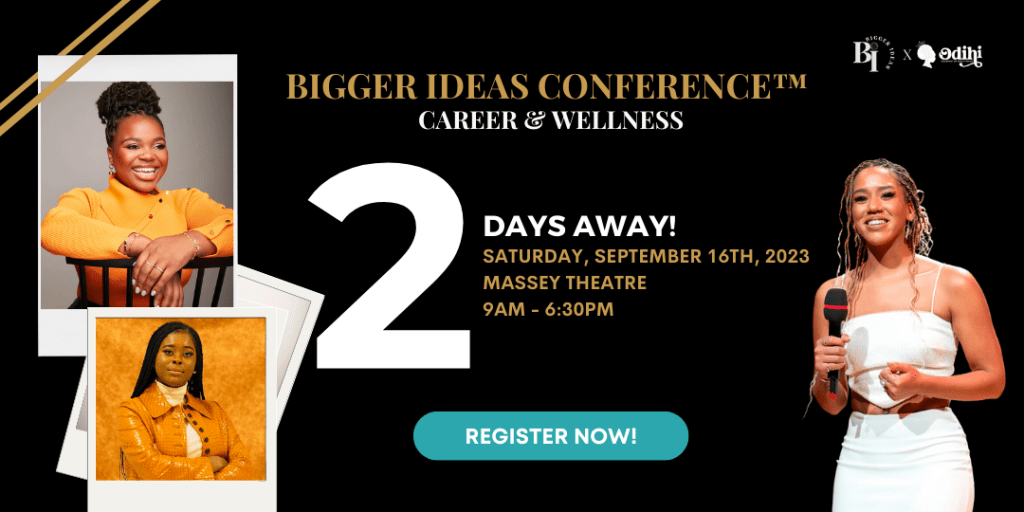
This virtual experience celebrates the remarkable strength, creativity, and determination of Black women entrepreneurs and will take place on Zoom (Meeting ID: 860 6022 4427, Passcode: 667385) so save your seat here!If you identify as a 19+ woman looking for an in-person event, you don’t want to miss out on Bigger Ideas Conference™️ (BIC) this Saturday at the Massey Theatre in BC! From 9am to 6:30pm, get ready to collaborate and invest in women’s education and advancement. This is your opportunity to connect with leaders and other great minds who can champion, empower, and support you along your journey.
Fuelled by Vancity, Odihi and Colour the Trails are excited to invite students, entrepreneurs, business owners and newcomers to come learn practical tools to succeed in life, career and business. RSVP here and use our exclusive code “BEBCBIC23″before it’s too late!
Saturday morning, we personally invite you to come to our 1stUNDPADmeeting. With the temporary programs set up by the government for the Black community ending next year in 2024, URGENT ACTION is required in Support of a Permanent Legislative Policy for Black Canadians. For the next couple of Saturdays, we are gathering together to determine how we can continue our journey to advance the rights of people of African descent.
HeadHeartHand Foundation (3HFoundation, www.3hfoundation.ca) is a registered non-profit located in Surrey, British Columbia, Canada and open to all members of the public.
Join us to discuss practical steps on Financial Management for Youthful Immigrants, organized by HeadHeartHand Foundation (3HFoundation) and sponsored by the Prospera Foundation, one of the largest credit union foundations in Canada.
I hope this email finds you well! My name is Naomi Hudson and I am the coordinator for Operation Black Vote Canada’s newest and most exciting initiative – 1834 Global. I am thrilled to invite you to apply for this high-profile training program, designed to empower the next generation of Black Canadians interested in the field of global affairs, international development, and diplomacy. Applications for the program’s second annual cohort have recently opened and we are inviting young Black Canadians from across Canada to apply. We highly encourage you to share the following information, as well as the promotional material attached to this email, with your members, clients, staff and volunteers, as well as with any other Black Canadians in your circle who would benefit from this program:
🎉 Exciting News! Applications are NOW OPEN! 🎉
If you have ever dreamed of pursuing a career in international affairs and representing Canada on the global stage, then 1834 Global is your gateway to success.
🌐 About 1834 Global:
1834 Global is a transformative 9-week virtual program that brings together talented young Black minds from all corners of Canada. Through this immersive experience, participants will connect, learn, and refine their skills, all under the expert guidance of prominent global affairs leaders from across the country. The program will begin in January 2024 and we are proud to offer flexible training sessions that accommodate your school and work commitments.
🌍 Program Perks:
As a participant in 1834 Global, you will benefit from a range of exceptional opportunities:
4-day 1834 Global Summit, where you will engage with influential diplomats, ambassadors, and global affairs experts.
The chance to connect with various multilateral organizations and gain insights into their critical work.
The unique opportunity to present your research and ideas in front of senior-ranked government officials, making a real impact on policies and initiatives.
Joining the prestigious 1834 alumni network, creating lasting connections and opportunities for future endeavours.
✅ Eligibility Criteria:
We encourage dynamic and ambitious Black Canadians aged 20 to 30 years to apply, who demonstrate:
Excellent writing, research, and teamwork skills, as we believe these are vital in shaping future leaders.
A genuine passion for global affairs, international development, and diplomacy, as we aim to nurture your enthusiasm and commitment.
🔗 How to Apply:
Ready to embark on this transformative journey? Email 1834global@obvc.ca to receive the application link. Our application deadline is October 13th, 2023, so don’t miss this chance to become a part of something truly special.
Some of today’s generations of a cruel British slave owner who had owned a string of sugar and other plantations in Guyana, are headed to the country this week to say sorry for the sins of the past.
Collaborating on this venture with the University of Guyana and several Afro organizations, the descendants of a planter named John Gladstone say the time is ripe for them to atone for the since of their fore parents and to help with healing and efforts to repair a horrible wrong as John Gladstone was a “vile and greedy man (BBC) whose wealth grew exponentially on the back of unpaid African slaves. One of Gladstone’s sons eventually became a four-time colonial era British prime minister. He is credited with owning more than 2,500 slaves in Guyana and Jamaica.
“The Gladstone family, which includes several historians, have today confirmed that they will in fact offer an apology given the role their ancestors had played here,” the university said in a weekend statement, unveiling its plans to engage with the family this week.
Local activists say they are unsure whether the Gladstones are reacting to pressure being mounted by Caribbean governments on former European slave trading nations to pay reparations, or by family consciences. It is unclear if similar plans are being organized in Jamaica.
The Guyana apology will be the latest in a string of significant similar attempts at remorse in the past year, starting with the one late December of last year by outgoing Dutch Prime Minister Mark Rutte for the role The Netherlands played in Suriname and other Dutch linkages in the Caribbean. He has also committed The Netherlands to future talks about slavery and reparations while offering $200 million to help with research about the lasting impacts of slavery.
Just about two months after, another United Kingdom family-the Trevelyans-traveled to Grenada to apologize for their ancestors owning more than 1000 slaves and six plantations in the Eastern Caribbean island which the US had invaded in 1983 after the government had collapsed owing to an internal rebellion among other factors. More than 40 of today’s Trevelyan family members have also signed a letter of apology for the atrocities of their fore parents. Former BBC journalist Laura Trevelyan who had made the trip to Grenada is also slated to be in the visiting delegation to Guyana. Laura Trevelyan says she is committed to helping with the reparations movement in the Caribbean.
Early last month, Dutch King Willem Alexander followed PM Rutte’s move and apologized for the Dutch’s role in the trans Atlantic slave trade, as he asked for forgiveness for that crime against humanity.
“Of all the ways in which a person can be robbed of their freedom, slavery is surely the most painful, the most degrading, the most inhuman.”
On the other hand, current Hindu Prime Minister of England Rishi Sanuk has stoutly refused to say sorry for Britain’s participation in slavery, taking a similar stance to that of former PM Dave Cameron when he had visited Jamaica eight years ago.
The Gladstone saga is significant in British and Caribbean history as he was one of those who had campaigned for slave owners to be compensated for losing their “property” when slavery was abolished in the 1830s. Records show that he was awarded nearly 100,000 pounds at the time. Historians reckon that this is equivalent to about Sterling 10 million today.
The effort to atone for their colonial era coincides with the 400 year anniversary of the August 1823 slave rebellion in coastal Demerara, Guyana. It was led by a black slave named Jack Gladstone in keeping with the practice of slaves taking the name of plantation owners and his dad, Quamina. More than 200 slaves were killed along with some whites, while about 50 were sentenced to death. Guyanese activists say surviving slaves were brutally tortured, heads slashed off and planted on poles to frighten others from rising up again. In all more than 10,000 slaves had revolted.




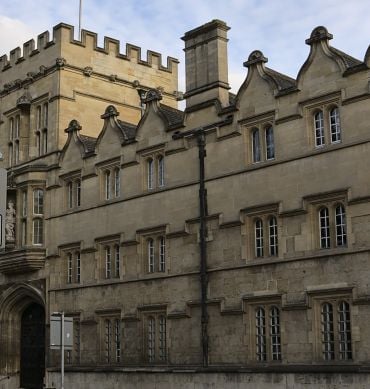 University College Oxford Credit: Shutterstock
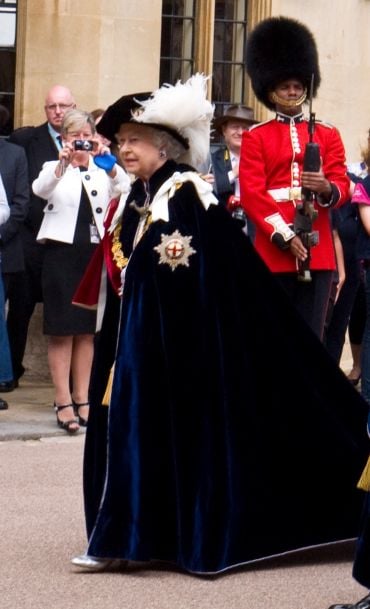 Her Majesty the Queen on Garter Day Credit: Shutterstock
















 guyanabc.ca