Master and Companion: Dame Valerie Amos and her journey from Guyana to the Garter

Baroness Amos

From: University of Oxford News & Events – Oxford Profiles
https://www.ox.ac.uk/news-and-events/oxford-people/Valerie-Amos
Curated by Sarah Whitebloom: sarah.whitebloom@admin.ox.ac.uk

It is not the sort of telephone call you receive every day, says a slightly stunned Baroness (Valerie) Amos, the Master of University College, who appears surprised by the call she received, inviting her to become a Lady Companion of the 674-year old Most Noble Order of the Garter.

Membership of the Order, founded in 1348, is an honour reserved for royalty (domestic and overseas), former prime ministers and highly-esteemed individuals, including judges, generals and public servants. Only one other person was made a member of the Order in the most recent New Year’s Honours list – the former Prime Minister Tony Blair (and half a million people objected to this appointment).  Did anyone object to her appointment? Baroness Amos laughs diplomatically, ‘Not as far as I know, although I haven’t checked social media.’

She was more likely than most to receive such a call from the Palace – after decades of public service, as a former government minister, long-term leader of the House of Lords, UN under-secretary general, former British High Commissioner to Australia, former head of SOAS and now Master of Univ. So, if not her, who?

Baroness Amos is the first person of colour to be appointed as a Companion (knight or lady) to the Garter.  (Haile Selassie I, the late emperor of Ethiopia, was a royal member of the Order)

Baroness Amos, though, is the first person of colour to be appointed as a Companion (knight or lady) to the Garter.  (Haile Selassie I, the late emperor of Ethiopia, was a royal member of the Order).  And she will be installed as part of the annual ceremony which takes place at Windsor in June. Her badge coat of arms (currently under construction) will be placed in her stall in St George’s chapel and her banner will hang overhead. Talking in her office looking down on Oxford’s high street, Baroness Amos admits she has already been talking to Garter King of arms about what should be on her personal coat of arms. She wants a reference to education and learning, a personal passion, as well as something about Guyana, the place of her birth, and her longer term lineage in West Africa. She also would like something about global affairs.

‘But I don’t want it to be too busy,’ she says, optimistically.
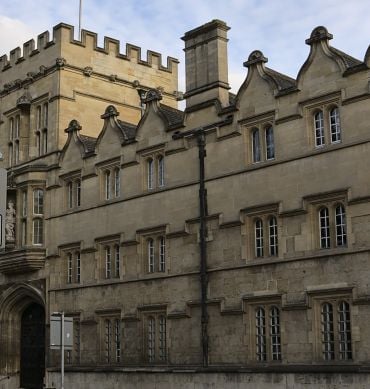
University CollegeUniversity College Oxford Credit: Shutterstock

Baroness Amos is conscious of the honour of this appointment[1], and looking forward to seeing her personal coat of arms, ‘Not something I ever would have thought I’d have.’

But this is only the latest in a long list of firsts she has achieved, on the way through many glass ceilings. As a Bexleyheath school girl, she admits, she was the first black deputy head girl of her school. Among others firsts: she was the first woman of colour to be a Government minister – and the first person of colour to be Leader of the House of Lords. She is a Companion of Honour and is also the first person of colour to lead an Oxford College.

Being first is not always something with which she is comfortable, though. Baroness Amos was surprised in 2015, when she was appointed Director of London’s prestigious School of Oriental and African Studies, to be told that she was the first person of colour to lead a UK university. 

‘It was quite surprising that this was the case in Higher Education,’ she says with concern.

As a Bexleyheath school girl, she was the first black deputy head girl of her school. Among others firsts: she was the first woman of colour to be a Government minister – and the first person of colour to be Leader of the House of Lords. She is a Companion of Honour and is also the first person of colour to lead an Oxford College

It had never occurred to Baroness Amos that she would not go to university. Both her parents were teachers and education was very much part of life in the Amos household. In fact, she says, her brother’s decision not to go to university was far more surprising.

‘It was a big deal,’ she says, more than four decades after the event.  

She left her Kent home for university in the 1970s, to take up a place at Warwick to study sociology. You really could not get much more ‘on trend’ than that. Warwick was the epicentre of political student activism, had numerous high-profile academics, and it offered a range of courses that the young Valerie was keen to pursue including options in women’s studies, international relations and the sociology of race relations.

‘There were so many opportunities,’ she says. ‘It was very forward looking and had everything that I was interested in.’

But, she says, she actually applied for different subjects at different institutions – ranging from English to Politics. 

In the 1970s, she took up a place at Warwick to study sociology. You really could not get much more ‘on trend’ than that. Warwick was the epicentre of political student activism, had numerous high-profile academics, and courses that the young Valerie was keen to pursue… women’s studies, international relations and the sociology of race relations

Her interest in education has been defining. She would go on to take further courses at Birmingham and East Anglia – and for the last seven years, since becoming Director of SOAS, she has been a leader in higher education.

Arriving at Univ in 2020, she says, was not the best time, in terms of the full Oxford experience. For much of her time as Master, Baroness Amos has presided over multiple changes and iterations of the requirements around COVID-19 – with online learning and social distancing replacing the sort of college atmosphere for which the university is renowned.

She reels off the stages students and staff have been through during the pandemic, recognising the difficulty and stress caused. But, typically finding an upside, she says, ‘There’s nothing like being in a state of adversity to help an individual understand a place and the culture….although it has been difficult getting to know people.’
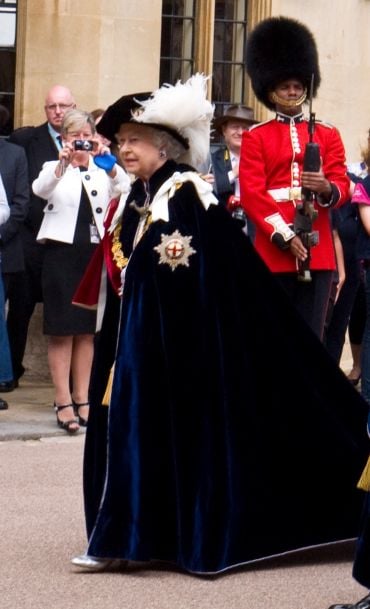
Her Majesty the QueenHer Majesty the Queen on Garter Day Credit: Shutterstock

Clearly intent on being involved with Univ life, Baroness Amos, speaking while some restrictions were still in place, is ready to plunge into collegiate life – and meet more of the students.

‘It’s been harder to meet them [during the pandemic],’ she says. ‘It’s not the same online…but I am really looking forward to doing so and to being part of the College.’

She is also very interested in ‘equalities and inclusion’ and keen to demonstrate that academic excellence can go ‘hand in hand’ with diversity.

‘Univ has been a pioneer in this area,’ she says. ‘In the past, young men from the north were supported to come here. It has been very much at the centre of the drive to increase diversity.’

And more recently, Univ pioneered the Opportunity Programme which was adopted by the central university as Opportunity Oxford.  Baroness Amos adds, ‘A lot of things have changed, but not enough…We need to create a culture which encourages people. Young people expect it.’

She has been at the forefront of equalities action for decades. So does the former head of the Equal Opportunities Commission, think past attempts to achieve equality failed or were somehow deficient?

‘The context was different in the 1980s,’ she says. ‘Our knowledge and understanding were different….information is global now.  Black Lives Matter went around the world instantly after the murder of George Floyd.’

Baroness Amos adds, ‘There was a global reaction and…there has been a recognition that people everywhere, from every community, need to be included.’

She maintains, ‘Our culture as Oxford has to adapt.’

But, she says, ‘I see this as adding to, rather than taking away….so students feel they belong, whatever their background and values, and they can make a contribution.’

Our culture as Oxford has to adapt…I see this as adding to, rather than taking away….so students feel they belong whatever their background and values, and they can make a contribution

Baroness Amos

Although keen to see some change, Baroness Amos is highly positive about the education at Oxford, ‘The tutorial system is just extraordinary.’

As the former leader of the Lords, Baroness Amos has experience of an historic institution undergoing change, ‘When I arrived in the House of Lords in 1997, there were a few women, over time there have been more…and the culture has changed, the way it works has changed. Now, we have a successful schools outreach programme and electronic voting’.

She adds, ‘Women have only been at Univ for 43 years, the college was founded nearly 775 years ago….it’s a very short time in the arc of history….there is still more work to do.’

But she does not want to see history erased – far from it.

‘We need more information – from other perspectives,’ she says. We need to ask: how can we all be more informed?’ She says simply, ‘If we don’t listen to other perspectives, we are less well informed.

‘We are in a university. A place of knowledge’

Baroness Amos speaks very much from the heart. Through her work with the UN, she travelled widely in West Africa, from where her ancestors were taken into slavery.  She is planning to do a DNA test ‘one of these days’. But this year she has her hands full, with throwing herself into Univ life – and taking up her new role in Windsor.


[1] She will continue to be Baroness Amos. Had she not had a previous title, as a Lady Companion of the Garter, she would have been entitled to be called Lady Valerie Amos.

By Sarah Whitebloom

British slave owner family to say sorry to Guyana

Caribbean Life: Your community, your news.

By Bert WilkinsonPosted on 

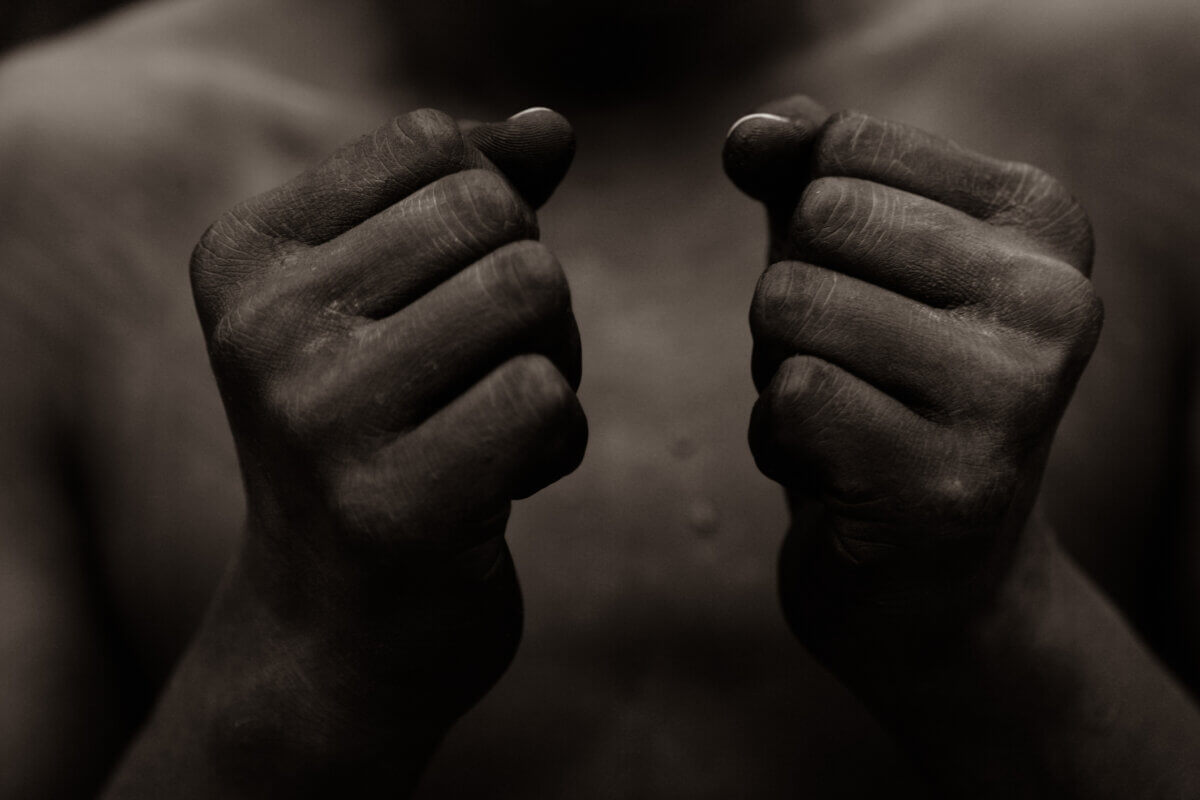
Black person holding fist in front of chest

Photo via Getty Images 

Some of today’s generations of a cruel British slave owner who had owned a string of sugar and other plantations in Guyana, are headed to the country this week to say sorry for the sins of the past.

Collaborating on this venture with the University of Guyana and several Afro organizations, the descendants of a planter named John Gladstone say the time is ripe for them to atone for the since of their fore parents and to help with healing and efforts to repair a horrible wrong as John Gladstone was a “vile and greedy man (BBC) whose wealth grew exponentially on the back of unpaid African slaves. One of Gladstone’s sons eventually became a four-time colonial era British prime minister. He is credited with owning more than 2,500 slaves in Guyana and Jamaica.

“The Gladstone family, which includes several historians, have today confirmed that they will in fact offer an apology given the role their ancestors had played here,” the university said in a weekend statement, unveiling its plans to engage with the family this week.

Local activists say they are unsure whether the Gladstones are reacting to pressure being mounted by Caribbean governments on former European slave trading nations to pay reparations, or by family consciences. It is unclear if similar plans are being organized in Jamaica.

The Guyana apology will be the latest in a string of significant similar attempts at remorse in the past year, starting with the one late December of last year by outgoing Dutch Prime Minister Mark Rutte for the role The Netherlands played in Suriname and other Dutch linkages in the Caribbean. He has also committed The Netherlands to future talks about slavery and reparations while offering $200 million to help with research about the lasting impacts of slavery.

Just about two months after, another United Kingdom family-the Trevelyans-traveled to Grenada to apologize for their ancestors owning more than 1000 slaves and six plantations in the Eastern Caribbean island which the US had invaded in 1983 after the government had collapsed owing to an internal rebellion among other factors. More than 40 of today’s Trevelyan family members have also signed a letter of apology for the atrocities of their fore parents. Former BBC journalist Laura Trevelyan who had made the trip to Grenada is also slated to be in the visiting delegation to Guyana. Laura Trevelyan says she is committed to helping with the reparations movement in the Caribbean.

Early last month, Dutch King Willem Alexander followed PM Rutte’s move and apologized for the Dutch’s role in the trans Atlantic slave trade, as he asked for forgiveness for that crime against humanity.

“Of all the ways in which a person can be robbed of their freedom, slavery is surely the most painful, the most degrading, the most inhuman.”

On the other hand, current Hindu Prime Minister of England Rishi Sanuk has stoutly refused to say sorry for Britain’s participation in slavery, taking a similar stance to that of former PM Dave Cameron when he had visited Jamaica eight years ago.

The Gladstone saga is significant in British and Caribbean history as he was one of those who had campaigned for slave owners to be compensated for losing their “property” when slavery was abolished in the 1830s. Records show that he was awarded nearly 100,000 pounds at the time. Historians reckon that this is equivalent to about Sterling 10 million today.

The effort to atone for their colonial era coincides with the 400 year anniversary of the August 1823 slave rebellion in coastal Demerara, Guyana. It was led by a black slave named Jack Gladstone in keeping with the practice of slaves taking the name of plantation owners and his dad, Quamina. More than 200 slaves were killed along with some whites, while about 50 were sentenced to death. Guyanese activists say surviving slaves were brutally tortured, heads slashed off and planted on poles to frighten others from rising up again. In all more than 10,000 slaves had revolted.

William Gladstone: family of former British PM to apologise for links to slavery

Story by Jonathon Smith and Paul Lashmar

The Guardian

Copyright: The Guardian

William Gladstone: family of former British PM to apologise for links to slavery

Story by Jonathan Smith and Paul Lashmar •1d

The family of one of Britain’s most famous prime ministers will travel to the Caribbean this week to apologise for its historical role in slavery.

Six of William Gladstone’s descendants will arrive in Guyana on Thursday as the country commemorates the 200th anniversary of a rebellion by enslaved people that historians say paved the way for abolition.

The education and career of William Gladstone, the 19th-century politician known for his liberal and reforming governments, were funded by enslaved Africans working on his father’s sugar plantations in the Caribbean.

As well as making an official apology for John Gladstone’s ownership of Africans, the 21st-century Gladstones have agreed to pay reparations to fund further research into the impact of slavery.

John Gladstone was the fifth-largest beneficiary of the £20m fund (about £16bn today) set aside by the British government to compensate planters when the Slavery Abolition Act was passed in 1833.

Early in his career, William spoke in parliament in defence of his father’s involvement in slavery and also helped calculate how much his father would be compensated.

John Gladstone owned or held mortgages over 2,508 enslaved Africans in Guyana and Jamaica. After emancipation he was paid nearly £106,000, a huge sum at the time.

The Demerara rebellion in August 1823 began on one of his plantations. It was led by Jack Gladstone, an enslaved man forced to take his owner’s name, and his father, Quamina, who had been transported from Africa as a child.

About 13,000 Africans rose up in Demerara, a British colony that later became part of Guyana. Conditions for the enslaved were particularly brutal there. The plantations were the most profitable in the British empire, with an enslaved person in Demerara worth twice that of one in Jamaica.

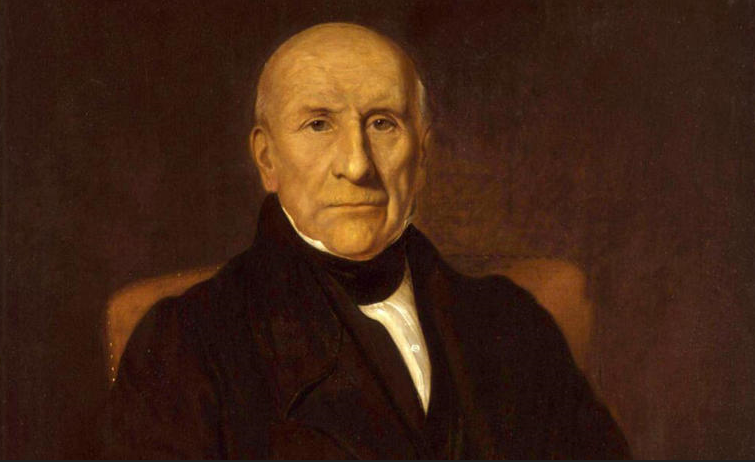
John Gladstone held more than 2,500 enslaved people on his plantations.

Photograph: Alamy© Provided by The Guardian

More than 250 enslaved Africans were killed and a further 51 sentenced to death when the uprising was crushed. Many of the convicted were tortured, decapitated and had their heads impaled on poles as a warning to others. Quamina’s body was hung in chains outside one of John Gladstone’s plantations.

Charlie Gladstone, 59, who lives in Hawarden Castle, the north Wales home of his great-great grandfather William, said: “John Gladstone committed crimes against humanity. That is absolutely clear. The best that we can do is try to make the world a better place and one of the first things is to make that apology for him.

“He was a vile man. He was greedy and domineering. We have no excuses for him. But it’s fairly clear to me that however you address it, a lot of my family’s privilege has stemmed from John Gladstone.”

The Gladstone family plans to apologise at the launch of the University of Guyana’s International Institute for Migration and Diaspora Studies, which they are helping to fund with a grant of £100,000.

They are members of the Heirs of Slavery, a group of families who can trace their ancestors back to the enslavement of Africans. Others include the Trevelyans, whose ancestors owned more than 1,000 enslaved people, and the Lascelles, who built Harewood House in Yorkshire with proceeds from slavery. In February, the aristocratic Trevelyan family made reparation history by travelling to the Caribbean and publicly apologising. The former BBC journalist Laura Trevelyan said: “If anyone had ‘white privilege’, it was surely me, a descendant of Caribbean slave owners.” She made a £100,000 reparation payment.

Eric Phillips, chair of the Guyana reparations committee and vice-chair of the Caricom Reparations Commission, said he was very happy that the Gladstones were visiting to apologise: “It is an example to others and means a great deal on the anniversary of such an important event.

“Because Britain was so central to life in the Caribbean, it has a premier role to play in terms of reconciliation and acknowledgement. The British prime minister’s indifference is quite a worry, especially given what the Heirs of Slavery are doing.”

The Church of England, the Dutch and Belgian royal families and the Dutch prime minister are among those who have apologised for their countries’ role in slavery. Rishi Sunak has refused to apologise.

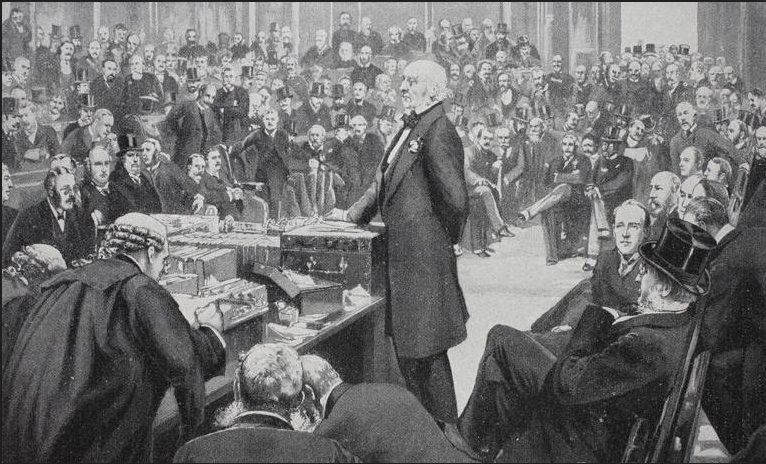
A print of Gladstone in the Commons: he is known as one of the 19th century’s great liberal politicians.

Photograph: Historical image collection by Bildagentur-online/Alamy© Provided by The Guardian

Phillips said: “Sunak knows what has happened with social justice throughout the world and with Black Lives Matter. To be that indifferent is frightening. It shows that he’s not fit to lead a multi-ethnic society like the UK.”

Charlie’s brother, Rob Gladstone, 54, said: “Reparative justice starts with an apology. It would be a more positive thing if more people did it and help build for the future. I think the British government could do something. It’s not massively controversial and it makes sense. Why not?”

The government denies that the prime minister is indifferent. David Rutley, a Foreign Office minister, has said that No 10 believes “the most effective way for the UK to respond to the cruelty of the past is to ensure that current and future generations do not forget what happened, that we address racism, and that we continue to work together to tackle today’s challenges, such as climate change”.

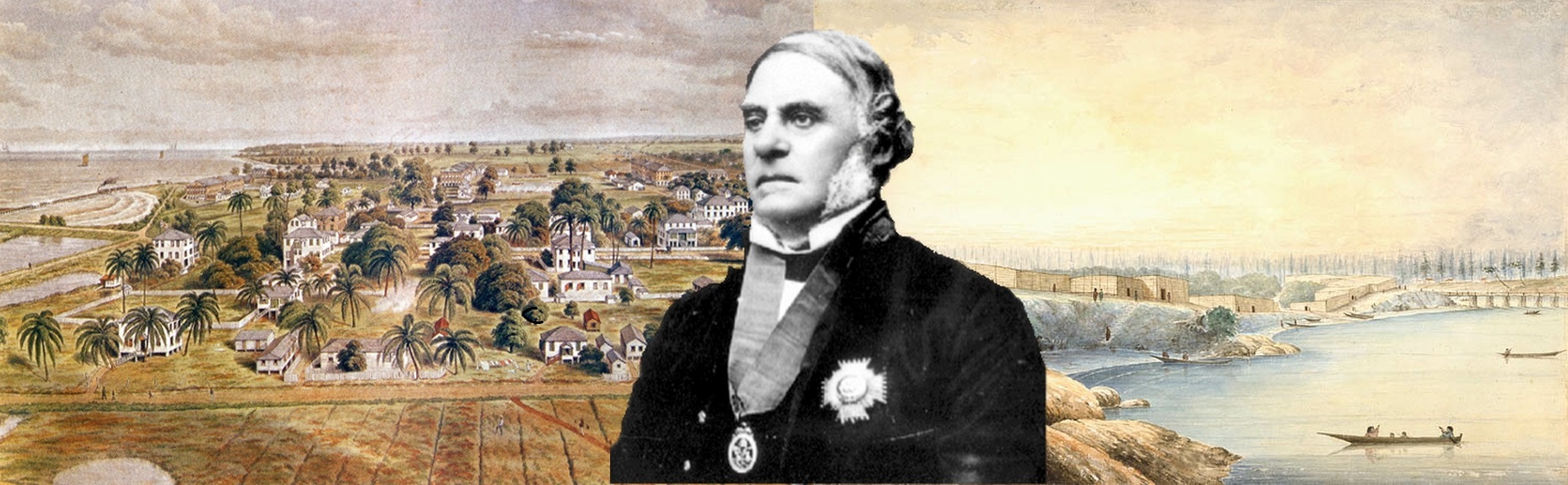
Sir James Douglas: Son of Demerara; Founder of British Columbia

`james-douglas-banner

Sir James Douglas

(August 4, 1803 to August 2, 1877)

In the mid-1800s, when racism was pronounced in many parts of the British Empire, it is interesting to reflect on the mixed racial backgrounds of British Columbia’s first governor and his wife. Popularly known as the “Father of British Columbia,” James Douglas became the Governor of Vancouver Island in 1851. He became the first Governor of the colony of British Columbia on November 19, 1858. This was during the Fraser Canyon Gold Rush. He helped establish order to assert British authority which had the potential to turn the B.C. Mainland into an American state. Without a doubt, he was one of our province’s most influential figures in the nineteenth century. His wife, Amelia, is often overlooked by historians, but she was a woman of distinction in her own right.

Douglas was born in 1803 in the Dutch colony that soon became British Guiana, now Guyana. His father was a Scottish sugar planter and was never married to Douglas’s mother, though he did eventually marry another woman in Scotland. Douglas was classed as a “free coloured boy” by virtue of his mother’s status. She (Martha Ann Telfer) had been born in Barbados and moved to the Guianas probably in the late 1790s. Though she was described as a “free coloured woman” her precise ancestry is not known at this time. Douglas was taken by his father to Scotland in about 1812 and after only six years of formal education was indentured to the North West Company. He arrived in Canada in 1819 and two years later became a Hudson’s Bay Company employee when the two rival fur companies merged. Douglas worked his way from one remote post to another, eventually reaching Fort St. James in northern British Columbia. There he met and married Amelia Connolly, daughter of the chief factor in charge of the region.

Amelia was born in 1812 in what is now northern Manitoba. Her mother was Miyo-Nipiy, a Cree woman, and her father was William Connolly, an Irish-French-Canadian fur trader. They were married in what was called “the custom of the country,” probably based on Cree marriage traditions. Amelia’s first languages were Cree and French, the two languages spoken at most of the forts in that area. English came later and throughout her life she spoke English with a strong accent.

James and Amelia Douglas had thirteen children, of whom only six survived past infancy. All the children were raised speaking French, Cree, English and Chinook Jargon, a trading language. After living at Hudson’s Bay Company’s posts at Fort Vancouver (now Vancouver, Washington) for almost twenty years, they settled in Victoria in 1849. James was Chief Factor and soon was appointed to the governorship as well.

The most important legacy of Douglas’s career came in 1858 and the years immediately afterward when a series of gold rushes brought tens of thousands of people to British Columbia, changing the face of the province forever. He is credited with establishing British law and order among mostly American miners who had little interest in observing the law of any land.

His important legacy ended August 2, 1877

(Excerpt from Old Square-Toes and His Lady: the Life of James and Amelia Douglas by John Adams. Published by Horsdal and Schubart in 2001, ISBN 0-920663-77-X.)

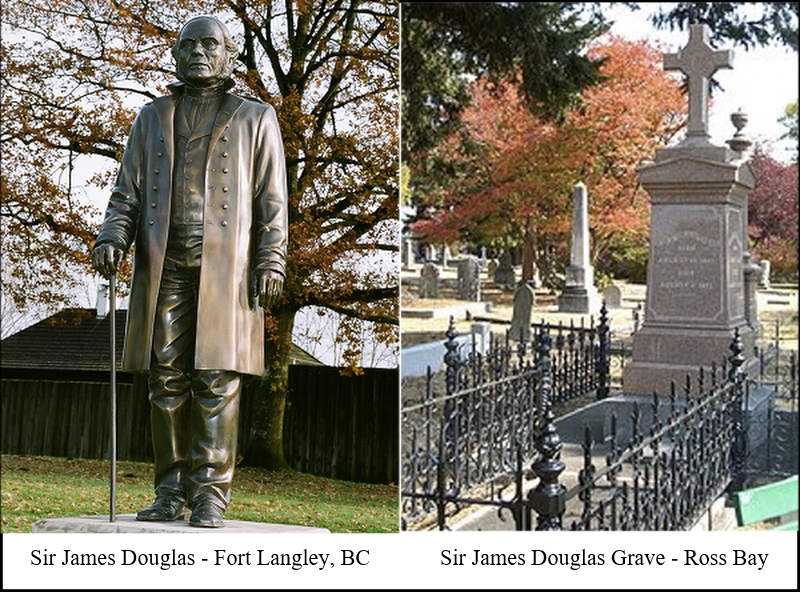
douglas-statue-and-grave

FORT LANGLEY, BRITISH COLUMBIA

In the days before the Colony of Vancouver Island and the Colony of British Columbia united, Governor Sir James Douglas chose Fort Langley to be the provisional colonial capital. By 1858, a town by the name of Derby, adjacent to the original location of the Fort, had been surveyed and subdivided into town lots and sold. On February 14th 1859 a new site at the mouth of the Pitt River was established.

Fort Langley is a village with a population of 2,700 and forms part of the Township of Langley. It is the home of Fort Langley National Historic Site, a former fur trade post of the Hudson’s Bay Company. In recent years, many of the village’s old buildings have been restored. The restorations, combined with its rural setting, access to the river and mountain vistas, and the old fort itself, make it a thriving tourist centre. Fort Langley has two museums in addition to the Fort.

CELEBRATING THE LIFE OF SIR JAMES DOUGLAS

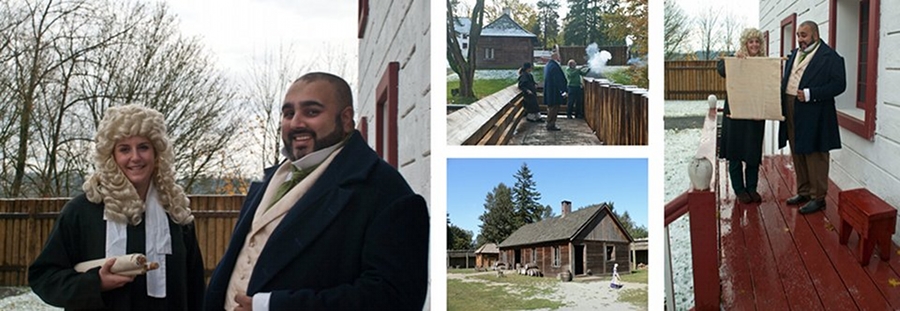
Annually Parks Canada, the Fort Langley Legacy Foundation and the Guyanese Canadian Cultural Association of BC, brings the Caribbean to British Columbia at Fort Langley with over 900 people in attendance. The proclamation of BC as a crown colony on November 19, 1858 is re-enacted and celebrated with ethnic food, steel drum music, and cultural dancing. This is an opportunity to show case Guyana in the context of the total Caribbean contribution to the rich cultural heritage in Canada

montage_900px